
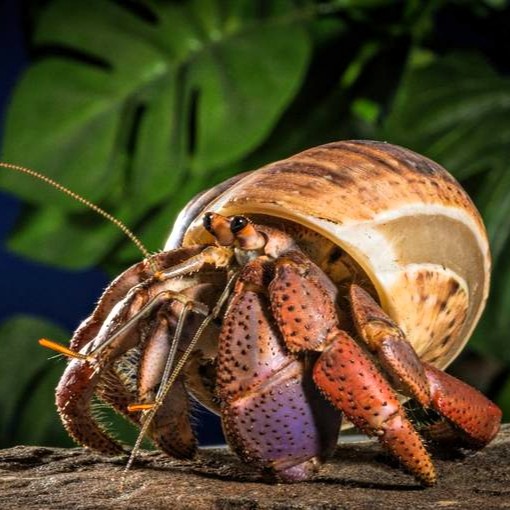
After weeks of research, countless photographs, Reddit discussions, and enough scientific names to make my eyes cross, my smallest hermit crab has finally been identified. Meet my little Purple Pincher, lovingly nicknamed by the hermit crab community as PP.
Or, to be fancy:
Coenobita clypeatus.
When I first brought him home, I wasn’t convinced he was a Purple Pincher at all. His lighter coloring and endless energy had me convinced I might have adopted an Ecuadorian hermit crab. As it turns out, I was wrong. The shape of his eyes and the characteristics of his claw were the deciding factors. And honestly, I’m happy to finally have an answer. Apparently identifying hermit crabs is harder than it looks.
Appearance
Purple Pinchers can vary significantly in color. They may appear:
- Tan
- Gray
- Brown
- Orange
- Purple
- Deep reddish-brown
Their coloration can even shift slightly after molting or what they eat. My little guy is quite light in color, almost tan, which was one of the reasons I originally suspected he might be an Ecuadorian. Color alone, however, can be deceiving when identifying hermit crab species.
Key identification features include:
- Large rounded left claw
- Round eyes
- Thick body shape
- Stockier appearance than many other species
In the end, it was his eyes and claw that helped identify him as a Purple Pincher.
Scientific Classification
Scientific Name: Coenobita clypeatus
| Common Names: | Native Range: |
| Purple Pincher (Nicknamed: PP) Caribbean Hermit Crab West Atlantic Hermit Crab Tree Crab (occasionally) | Caribbean Islands Bahamas Southern Florida Parts of Central America Northern South America |
Unlike aquatic hermit crabs, Purple Pinchers are land hermit crabs. While they still require access to both freshwater and saltwater, they spend the vast majority of their lives on land.
Why Are They Called Purple Pinchers?
The nickname comes from their large left claw. As they mature, this claw often develops a purple coloration ranging from lavender to deep plum. This oversized claw serves several purposes:
- Defense against predators
- Blocking the entrance of their shell
- Digging
- Climbing
- Winning arguments with other crabs
The large claw acts like a built-in front door. When threatened, they simply pull into their shell and use the claw as a shield. It’s surprisingly effective.
Behavior
Purple Pinchers are highly social and surprisingly active animals. In the wild, they live in large groups and communicate through touch, scent, sound, and behavior. Mine certainly didn’t get the memo that crabs are supposed to sit quietly and look decorative.
I’ve had him for almost three weeks now, and he spends his evenings exploring every inch of the crabitat. He pokes into corners, climbs over decor, investigates food dishes, and generally makes sure everything is exactly where he thinks it should be.
If there’s something new in the tank, he must inspect it. If there’s food, he must investigate it. If I move something, he must determine why. This tiny crustacean is busy. Very busy. Purple Pinchers are known for:
- Climbing
- Digging
- Exploring
- Rearranging their environment
- Social interactions with other crabs
If there is something to climb, they will climb it. Branches. Vines. Decorations. Tank lids. Things you thought they couldn’t possibly reach. Purple Pinchers are expert climbers. They burrow to destress, hide, sleep and prepare for molts. Sometimes they disappear for weeks or months while molting underground. This is completely normal and one of the most stressful experiences for new crab keepers. I can already feel my blood pressure rising just thinking about their first molt.
Many owners, like myself, carefully decorate their crabitat. The crabs immediately redecorate. Apparently interior design is a collaborative process. So far, my little guy seems determined to demonstrate every item on that list.
One of my favorite parts of owning hermit crabs so far has been watching him slowly become more comfortable with me. When I first brought him home, any movement near the tank would send him disappearing back into his shell.
Now, when I’m cleaning the tank or replacing food, he often just freezes and watches me. Progress! He doesn’t immediately retreat anymore. Instead, he stares at me suspiciously, probably trying to determine whether I am friend, foe, or giant food-delivery service.
I like to think we’re getting to know each other. I even talk to them as I feed them, even while they’re sleeping. How else are they supposed to get to know their new mother?
Shell Preferences
One of the most important things a Purple Pincher owner can know is: They are picky. Very picky. Purple Pinchers generally prefer shells with round openings. Some favorites include:
- Mexican Turbo shells
- Jade Turbo shells
- Petholatus Turbo shells
Shell selection is extremely important because shells provide:
- Protection
- Moisture retention
- Space for carrying water reserves
- A safe place to molt and rest
Having a variety of appropriately sized shells available is incredibly important. My little Purple Pincher has already completed one shell swap since coming home with me. When I adopted my crabs, I intentionally chose hermies wearing natural shells rather than painted shells. His original shell was small and reminded me of a snail shell.
Then my larger hermit crab upgraded into a different shell. My little guy wasted absolutely no time claiming the vacancy. The new shell appears to be either a Shark Eye shell or possibly a Turbo shell, though shell identification has become yet another rabbit hole I wasn’t prepared to fall into.
Honestly, the more I learn about hermit crabs, the more I discover that every topic leads to three more topics. The new shell is noticeably larger than the one he arrived in, and he seems quite pleased with his choice.
Diet
In the wild, Purple Pinchers are scavengers. They eat almost anything they find. A healthy captive diet should include variety.
| Protein | Calcium | Fruits | Vegetables | Healthy Fats |
| Shrimp Fish Mealworms Crickets Chicken Eggs | Cuttlebone Oyster shell Eggshells | Mango Papaya Apple Banana Coconut | Carrots Spinach Bell peppers Squash | Unsweetened coconut Chia seeds Hemp seeds |
Purple Pinchers require much more protein than many people realize. Many commercial hermit crab foods contain preservatives and ingredients that experienced keepers avoid. These are some basics, I will get more into depth about Hermit Crab Diet in another post…it’s extensive.
Tank Requirements
Despite their small size, Purple Pinchers require a surprisingly advanced setup. Hermit Crabs require a lot of space for their size. Most experienced hermit crab owners recommend 10 gallons per crab, with 5 gallons being the bare minimum if you have a baby crab and that is still highly debated.
| Temperature | Humidity | Substrate | Water |
| Ideal: 75–85°F Sweet Spot: Around 80°F | Ideal: 70–80% | At least: 6 inches deep Or 3–4 times the height of your largest crab | Freshwater pool Saltwater pool |
You might ask your self, why so much fuss? Why make everything so complicated? At the end of the day, these are tropical creatures. The temperature must reflect that. Humidity helps keep their modified gills moist so they can breathe properly. They need both, salt water and fresh water. Both pools should be deep enough for the crab to fully submerge if desired.
Recommended Substrate mix: 5 parts play sand + 1 part coco fiber = Sandcastle Consistency
Molting
Molting is one of the most fascinating parts of hermit crab ownership. As Purple Pinchers grow, they shed their exoskeleton. During this process they often:
- Dig underground
- Remain hidden for weeks or months
- Become extremely vulnerable
The old exoskeleton is usually eaten afterward because it contains valuable calcium and nutrients. Nature wastes nothing. So the key word is going to be patience for this endeavor. I don’t know if my heart can take this when the time comes.
Are Purple Pinchers Rare?
Not at all. Purple Pinchers are the most common land hermit crab species sold in the United States. However, what is rare is finding one that receives proper care. Many spend their lives in unsuitable environments because pet stores and beach shops often provide outdated information.
With proper husbandry, Purple Pinchers can live for decades. Some have been documented living well over 20 years. That means the tiny crab sitting in a shell today could potentially be around longer than some family pets.
What began as a simple vacation purchase has quickly become an education. We’ve only known each other for a few weeks, but I’ve already learned that Purple Pinchers are far more complex than most people realize. The more I learn, the more impressed I become.
They’re curious.
They’re social.
They’re intelligent.
They are stubborn.
They are dramatic.
They are surprisingly complicated.
And they somehow have the ability to turn grown adults into people who spend their evenings researching shell openings, claw shapes, and crab eyeballs on the internet. I still have a lot to learn. We are both figuring things out together. But watching this tiny crustacean explore his world, gain confidence, switch shells, and slowly settle into his new home has been one of the most rewarding parts of this adventure.
I can’t wait to watch him grow. I can’t wait to see what shell he chooses next. And I can’t wait to continue learning alongside him as we both navigate this wonderfully chaotic journey into the world of hermit crabs. Though if he could maybe stop creating new research projects for me every week, my wallet and my search history would greatly appreciate it.
And again…I regret nothing.
-Bella Imperia
Leave a Reply